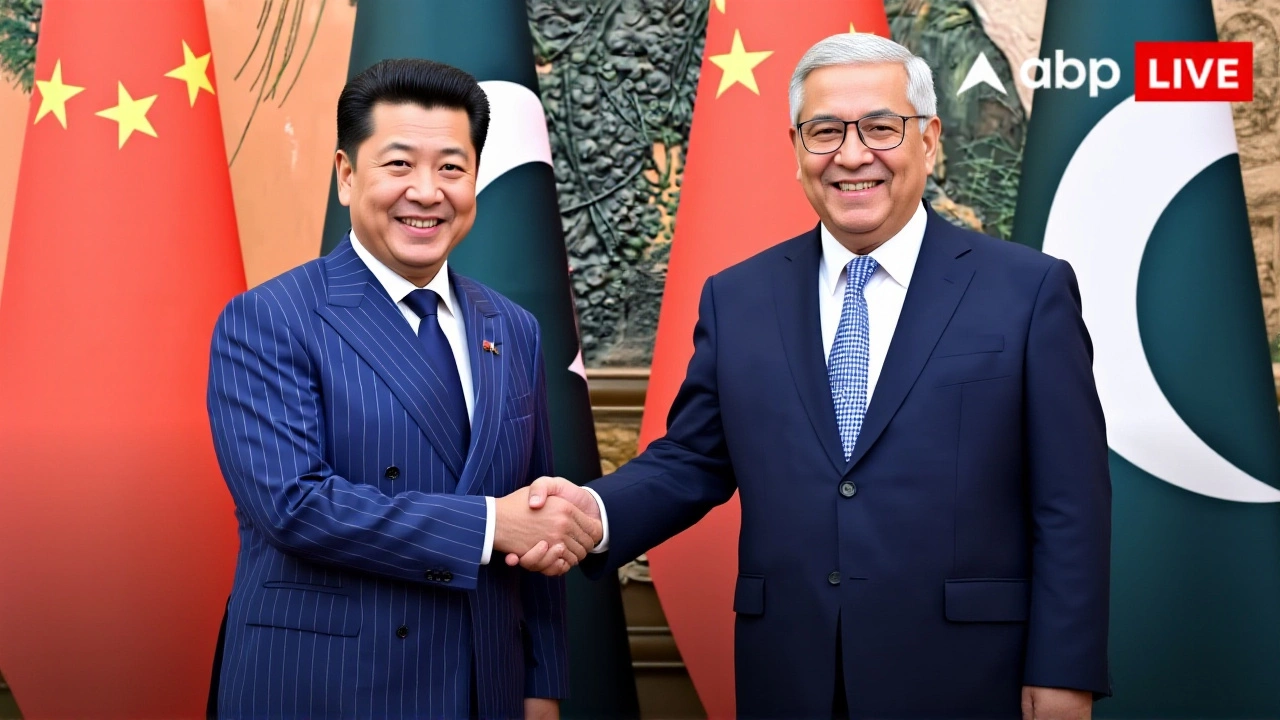
When Asif Ali Zardari, President of Pakistan, stepped into the Great Hall of the People in Beijing on February 6, 2025, the optics were unmistakable. He was there at the invitation of Xi Jinping, President of China. The two leaders issued a joint statement that day, reinforcing what Beijing calls an "all-weather friendship." But here’s the thing: while Indian media outlets quickly framed the visit as a coordinated diplomatic offensive against New Delhi—specifically regarding Jammu and Kashmir—the actual text released by the Chinese Ministry of Foreign Affairs doesn’t explicitly mention India or Kashmir. So, what exactly did they agree on?
The document is standard high-level diplomatic fare. It opens with the protocol-heavy acknowledgment of Zardari’s visit, noting the warm reception he received. From there, it moves into the meat of their partnership: economic integration, security cooperation, and mutual support on international stages. For readers tracking the shifting sands of South Asian geopolitics, this isn’t just another handshake photo-op. It’s a recalibration of power dynamics happening right under the nose of regional rivals.
The "Ironclad" Partnership in Action
To understand why this February 2025 statement matters, you have to look at the foundation. China and Pakistan established diplomatic ties in 1951. That’s over seven decades of consistent alignment. In January 1963, they signed the Sino-Pakistan Agreement, which resolved their boundary disputes—a rare instance of border clarity in this region. Since then, the relationship has deepened from simple trade links to a complex web of military and economic interdependence.
The Council on Foreign Relations (CFR), a US-based think tank, notes that this bond is built on more than just goodwill. China has provided significant military assistance, including sensitive nuclear technology transfers in earlier decades. Economically, the stakes are higher now. A comprehensive free trade agreement signed in 2008 gave both nations unprecedented market access. At the time of the CFR’s analysis, bilateral trade hovered around $7 billion annually, with ambitious targets set to reach $15 billion. Today, those numbers have likely surged, driven by infrastructure projects ranging from highways to nuclear power plants.
But the most visible symbol of this tie remains the China-Pakistan Economic Corridor (CPEC). While not explicitly detailed in the short excerpt of the joint statement, CPEC is the elephant in the room. It’s a $62 billion network of roads, railways, and energy projects that connects Gwadar Port in Pakistan to China’s western province of Xinjiang. For Islamabad, it’s a lifeline. For Beijing, it’s a strategic gateway to the Arabian Sea.
Military Cooperation: More Than Just Talk
Let’s get straight to the defense angle, because that’s where the real weight lies. The Chinese government’s country profile on Pakistan highlights a "high level of strategic mutual trust" between their armed forces. This isn’t vague praise; it’s backed by institutionalized action.
For years, the militaries of both nations have conducted recurring joint exercises. You’ve got the Army’s "Friendship" and "Warrior" series, the Air Force’s "Shaheen" drills, and the Navy’s "Sea Guardian" operations. These aren’t one-off events. They’re standardized training programs designed to ensure interoperability. Senior military officials engage in frequent high-level interactions, advancing cooperation in equipment and military technology. When Chinese Foreign Minister Wang Yi described these ties as "ironclad" during the 75th anniversary of diplomatic relations, he wasn’t using hyperbole. He was stating a operational reality.
This military closeness becomes particularly significant when you consider the recent volatility in the region. The Stimson Center reported a severe four-day conflict between India and Pakistan in May 2025, following a terrorist attack in April. India launched "Operation Sindoor," striking nine sites across Pakistan, while Pakistan responded with "Marka-e-Haq." During such crises, having a reliable partner like China—who provides diplomatic cover and advanced weaponry—is invaluable for Islamabad.
The Kashmir Question: Silence Speaks Volumes
Here’s where it gets tricky. Indian media narratives suggested that the February 6 joint statement contained critical language regarding India and the disputed territory of Jammu and Kashmir. However, a close reading of the official text released by the Chinese Ministry of Foreign Affairs reveals no explicit mention of India, Kashmir, or Ladakh.
So, why the uproar? Context is key. Pakistani academic commentary, such as an article from the China Study Center at the University of Peshawar dated May 16, 2025, highlights China’s "strong moral and diplomatic support" for Pakistan during tensions with India. This support often manifests in multilateral forums like the United Nations, where China has historically vetoed or blocked resolutions unfavorable to Pakistan. By issuing a joint statement reaffirming their "strategic partnership," Beijing and Islamabad are signaling unity. Even without naming India directly, the message to New Delhi is clear: Pakistan is not alone.
This subtle diplomacy is a hallmark of Chinese foreign policy. They prefer broad statements of principle over specific condemnations, allowing them to maintain economic ties with India while simultaneously strengthening security bonds with Pakistan. It’s a balancing act that keeps Beijing in a position of leverage.
What’s Next for South Asia?
The February 2025 joint statement is a snapshot of a relationship that continues to evolve. With the 75th anniversary of diplomatic ties recently celebrated—with both nations unveiling a special logo—the symbolic importance of this partnership is at an all-time high. But symbols don’t pay bills or secure borders.
Looking ahead, several factors will shape the next chapter. First, the economic viability of CPEC projects. Can Pakistan manage its debt burdens while delivering returns on Chinese investments? Second, the geopolitical fallout from the May 2025 India-Pakistan conflict. If tensions remain high, expect further militarization of the border and deeper Sino-Pakistani defense cooperation. Finally, watch for shifts in US policy. Washington’s approach to South Asia will influence how both China and Pakistan navigate their respective alliances.
For now, the joint statement serves as a reminder that in South Asia, alliances are rarely static. They are dynamic, deeply entrenched, and increasingly central to global power struggles. As one analyst put it, "In times when real friends are needed, China and Pakistan stand together." Whether that stands up to the pressures of economic reality and regional conflict remains to be seen.
Frequently Asked Questions
Did the joint statement explicitly mention India or Kashmir?
No, the available text of the joint statement issued on February 6, 2025, does not explicitly mention India, Jammu and Kashmir, or Ladakh. While Indian media interpreted the visit as a diplomatic move against New Delhi, the official document focuses on bilateral cooperation, economic ties, and general strategic partnership without naming third parties.
Who attended the meeting in Beijing?
The meeting was attended by Asif Ali Zardari, President of Pakistan, who visited at the invitation of Xi Jinping, President of China. The talks took place in Beijing and resulted in a joint statement reaffirming their long-standing diplomatic and economic relations.
What is the history of China-Pakistan military cooperation?
Military cooperation dates back to the 1960s, following the resolution of boundary disputes in 1963. Today, it includes regular joint exercises such as the Army's "Friendship" and "Warrior" series, the Air Force's "Shaheen" drills, and the Navy's "Sea Guardian" operations. China has also provided significant military hardware and technology, including sensitive nuclear components in earlier decades.
How significant is the economic relationship between the two countries?
The economic bond is substantial, anchored by the China-Pakistan Economic Corridor (CPEC), a $62 billion infrastructure initiative. A comprehensive free trade agreement signed in 2008 has boosted bilateral trade, which previously hovered around $7 billion annually. Key sectors include energy, mining, and transportation, with China investing heavily in Pakistan’s power plants and highway networks.
What was the context of the May 2025 India-Pakistan conflict?
A four-day military crisis occurred from May 7 to May 10, 2025, following a terrorist attack in April. India launched "Operation Sindoor," striking targets in Pakistan-administered Kashmir and Punjab. Pakistan responded with "Marka-e-Haq." This conflict highlighted the strategic importance of China’s support for Pakistan, as Beijing provided diplomatic backing during the heightened tensions.